Chinese characters are a core cultural symbol of the enduring Chinese civilization, as well as an important medium through which the world can understand China and engage in equal dialogue among civilizations. To implement the training objectives for professionals in international Chinese education, and to integrate the inheritance of fine Chinese language and culture and the development of cross-cultural communication competence into practical teaching, the School, under the overall coordination of the National Language Promotion Base (Shenzhen University), organized master's students in International Chinese Education to step out of the classroom. On October 10, they visited the Bao'an Cultural Center and the “Origins of Oracle Bone Script” themed exhibition at the Eye of the Greater Bay Area, taking part in a distinctive and engaging practical lesson in language and writing aesthetic education. The activity was planned and led by Associate Professor Wang Hongyan, a committee member of the Base, representing a constructive effort by the School to explore a practical teaching model for promoting fine traditional Chinese culture to international audiences, grounded in the cultivation of specialized professional talent.

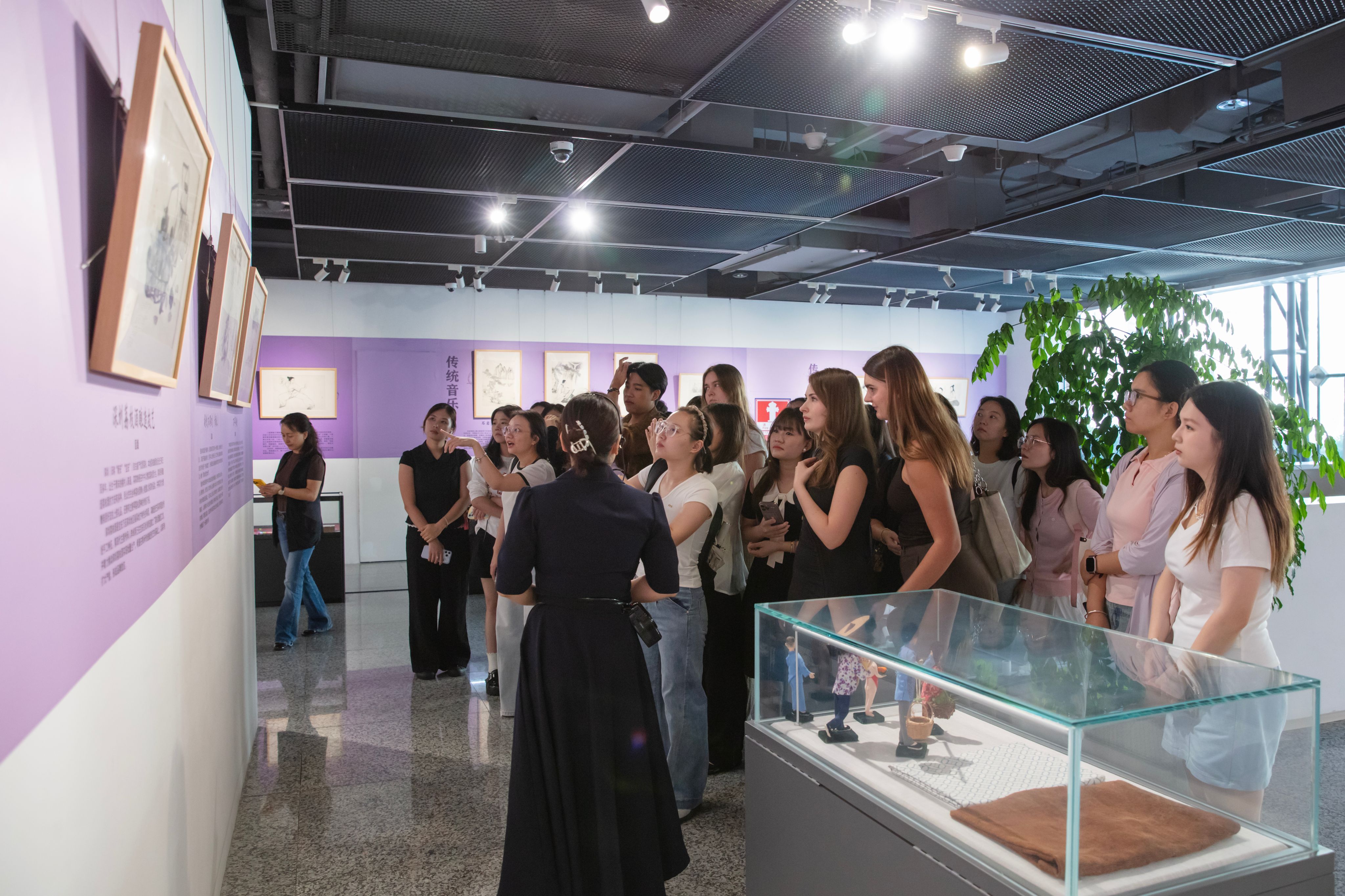
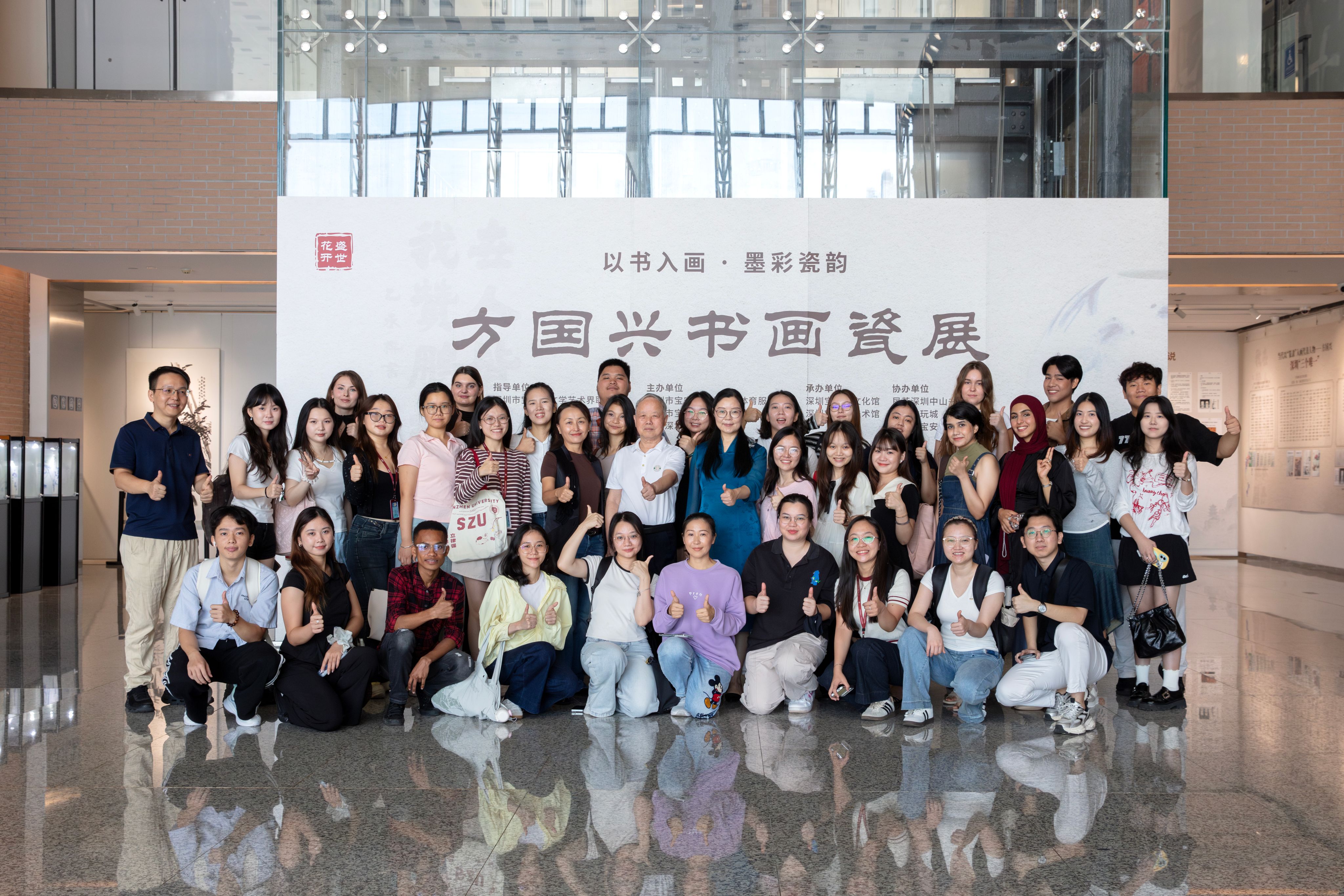
Learning does not stop at the classroom door; cultural understanding grows through on-site engagement. The first stop of the study tour was the Bao'an Cultural Center, where overseas students immersed themselves in the core Chinese-character culture underlying intangible cultural heritage crafts. The group visited Fang Guoxing’s Calligraphy, Painting, and Ceramics Exhibition and listened to an on-site guided tour by the artist Mr. Fang Guoxing. Drawing on the origins of Chinese characters and combining actual works of calligraphy, painting, and ceramics, he traced the evolution of Chinese script, interpreted the artistic conception of brush and ink in Chinese painting and the aesthetics of ceramics, and explained how Chinese characters, as a foundational cultural symbol, run through the creation of Chinese painting, calligraphy, and ceramic art. Chinese characters are not merely tools for recording language; they are also an important carrier of traditional Chinese aesthetic thought. The art of calligraphy, painting, and ceramics is thus an extension and outward expression of the aesthetics of Chinese characters.
“In textbooks, we could only see images of different scripts. Today, seeing Chinese characters on paintings and ceramics in person made me truly feel the artistic beauty of the characters themselves,” said one international student participating in the study tour. Moving beyond flat illustrations in books, the students gained an intuitive sense of how the aesthetics of Chinese characters permeate traditional art within a real setting for appreciating artworks. This immersive experience of Chinese aesthetic education complemented their theoretical classroom learning with a richer, sensory understanding.

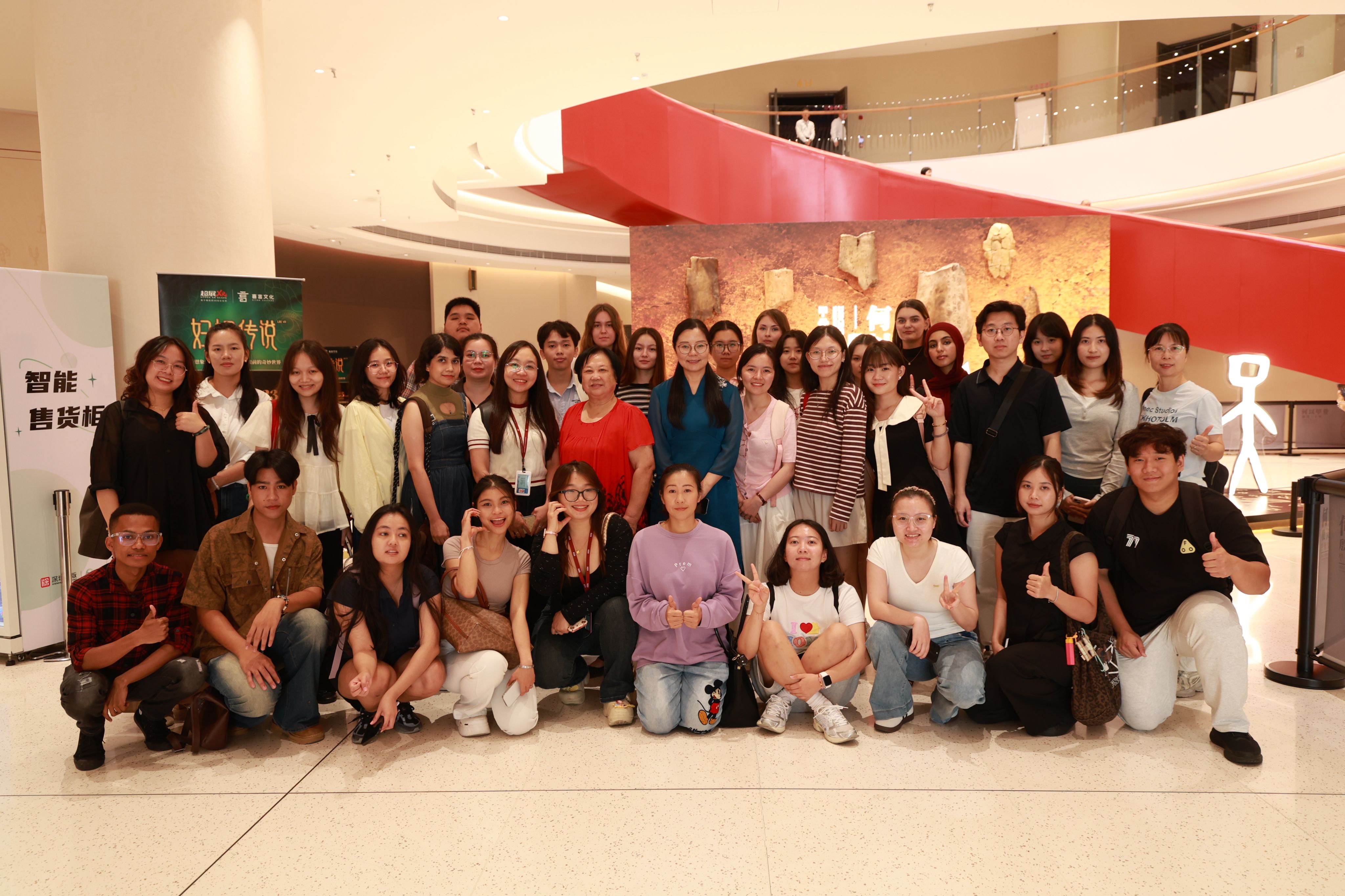
The study tour group then went to the Eyes of the Greater Bay Area to visit the “Origins of Oracle Bone Script” oracle-bone themed exhibition, created by the Shenzhen Publishing and Media Group. Oracle bone script is the source of China’s written civilization, embodying the wisdom and aesthetic sensibility of the ancient Chinese people. Inside the exhibition hall, the students traced the origins of Chinese civilization through the ancient inscriptions carved on oracle bones, and, guided by authentic oracle-bone artifacts and charts of character evolution, came to appreciate the beauty of form and meaning that Chinese characters have carried across millennia. No longer merely memorizing character shapes, they looked beyond the surface of written symbols to understand the cultural DNA and civilizational spirit embedded within them.

Many students said they had gained a great deal. One international student remarked, “The story of oracle bone script is deeply moving. When I return home and teach Chinese, I will share what I have seen today about oracle bone culture with my students, so that more people can learn about the long origins of Chinese characters.” Most master’s students in International Chinese Education at the School will go on to teach Chinese overseas, making them natural agents of cross-cultural communication. This practical teaching session went beyond superficial cultural visits; it placed greater emphasis on developing students’ cultural understanding and cultural translation abilities, guiding international students to move from being perceivers of Chinese civilization to becoming international storytellers of Chinese aesthetic education.
Associate Professor Wang Hongyan noted, “Chinese characters carry the enduring cultural DNA of Chinese civilization. International Chinese education should not only teach learners to recognize and use Chinese characters, but also guide them to understand the Chinese cultural heritage behind them. We are actively extending language and writing aesthetic education into public cultural spaces, and, building on the professional training platform of International Chinese Education, helping overseas learners do more than recognize the forms of Chinese characters. We aim to help them develop perspectives for understanding Chinese cultural heritage, acquire the ability to interpret Chinese culture across cultural boundaries, and grow into envoys for equal dialogue among different civilizations.”
alent cultivation is the core mission of international Chinese education, while cultural exchange and mutual learning constitute an important task entrusted to the profession by our times. This off-campus practical class was a vivid example of how the School, in collaboration with the National Language Promotion Base (Shenzhen University), has leveraged the regional advantages of the Greater Bay Area to organically integrate professional teaching, the inheritance of the cultural lineage of Chinese characters, aesthetic education in language and writing, and the international dissemination of Chinese culture.
Looking ahead, the College of International Exchange will continue to draw on its disciplinary strengths and platform resources to develop more regularized and scenario-based practical teaching programs. It will strive to infuse fine traditional Chinese culture throughout the entire process of talent cultivation, enhance the cultural literacy and cross-cultural communication competence of master's students in International Chinese Education, build bridges for cross-cultural dialogue through overseas young students, help the world better understand China, and enable fine traditional Chinese culture to renew its vitality in the course of exchanges and mutual learning among civilizations.





 Home



