In September, Jining is just beginning to embrace the touch of autumn, steeped in two millennia of Confucian heritage. From September 25 to 28, the 2026 Confucius Culture Week for Chinese and Foreign Students, hosted by the Center for Chinese–Foreign People-to-People Exchanges and Cooperation of the Ministry of Education, was held in Jining, Shandong Province. Shenzhen University sent a delegation of six Chinese and international students to participate.
Over the course of four days, SZU students joined young people from around the world in following in the footsteps of the ancient sages — visiting the sacred grounds of Nishan, touring the Confucius Mansion and Temple, engaging in dialogues on mutual learning among civilizations, touring modern enterprises, and making their voices heard at the "World Youth Talk." It was more than a cultural study tour; it was a living, walking lesson in the mutual learning of civilizations.

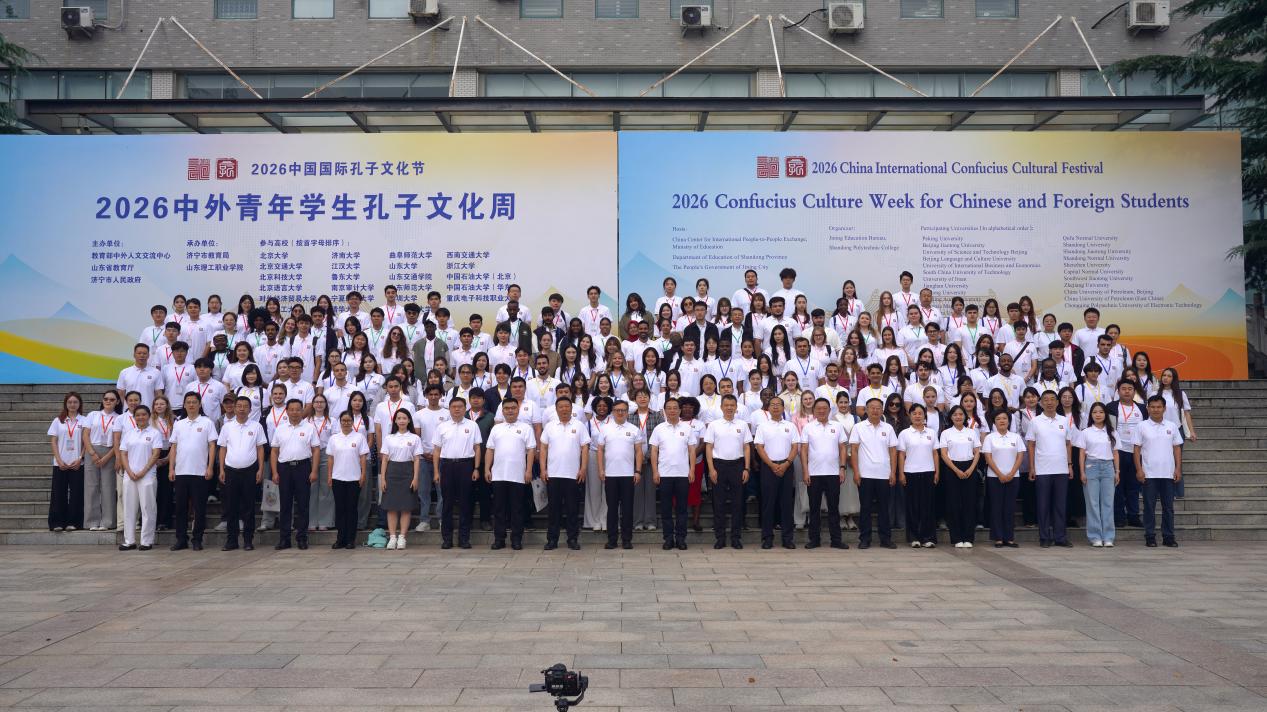
On the evening of September 25, a briefing session was held to provide pre-event instructions on the schedule, code of conduct, and safety guidelines, laying the groundwork for the smooth implementation of the activities to follow. On the morning of September 26, the opening ceremony of the 2026 Confucius Culture Week for Chinese and Foreign Students took place.

At the opening ceremony, KASPIAROVICH KRYSTSINA, a Belarusian student from Shenzhen University, delivered a speech on behalf of all international students. Drawing on her experience studying Teaching Chinese to Speakers of Other Languages at Shenzhen University, she traced her journey from “nihao” to “Is it not delightful to have friends coming from afar,” and from Pinyin and tones to each stroke of a Chinese character, sharing how she has come to understand China through the Chinese language and touch the depth of civilization through its classics. She said that Chinese is a bridge connecting the world with China, youth with dreams, and herself with China’s millennia-old culture. With Chinese as her wings and dreams as her boat, she expressed her hope to tell China’s stories well, make China’s voice heard, and see young people from China and other countries appreciate each other’s beauty and share in the beauty of diversity. Her heartfelt reflections, nurtured in the classrooms of Shenzhen University, won warm applause from teachers and students present.

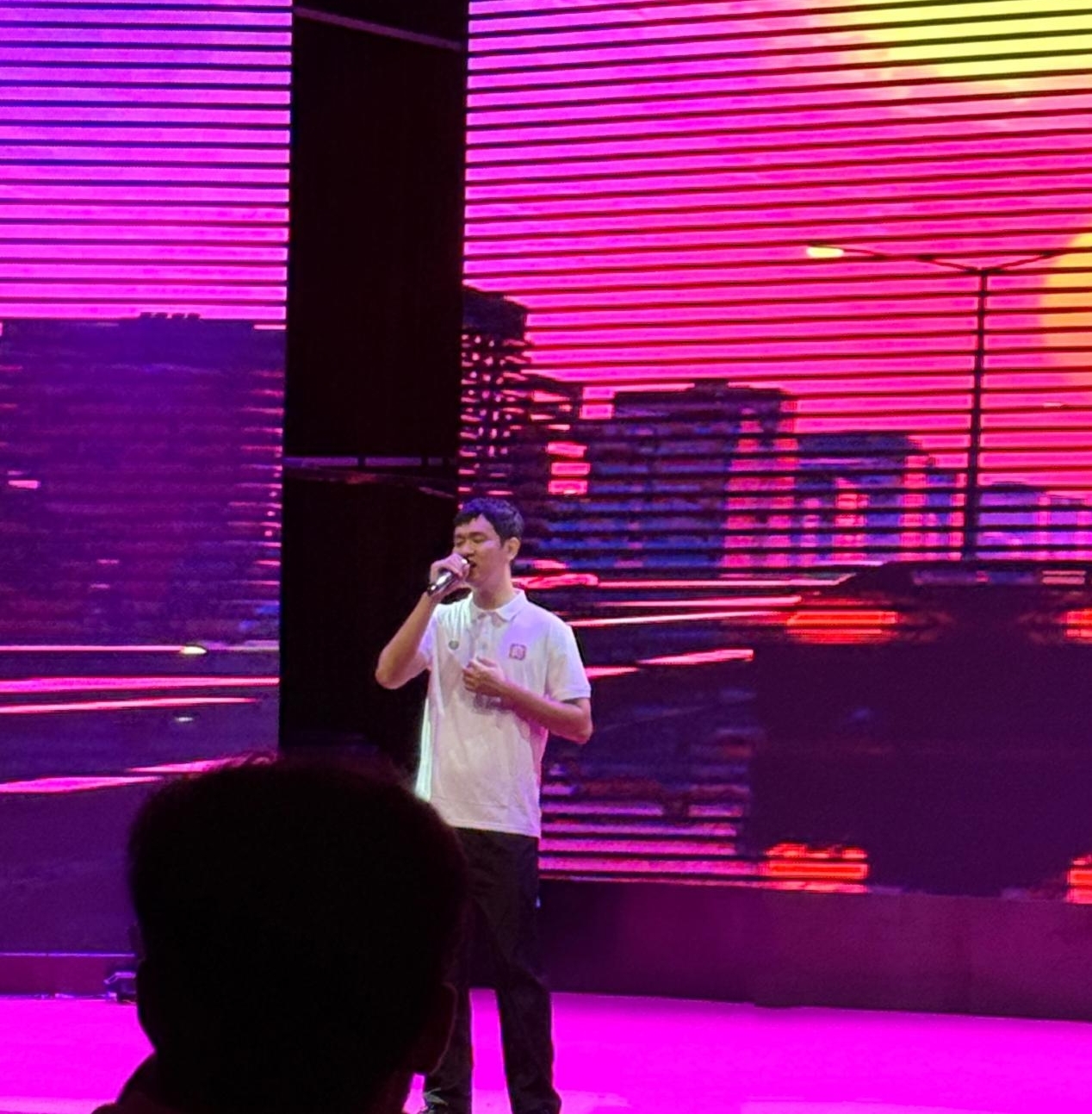
Following the speech, Chen Zhiliang, an American student from Shenzhen University, took part in the opening ceremony performance, opening the show with the song "Zhang San's Song." As the warm melody filled the venue, the distance between languages quietly melted away, and youthful smiles lit up the room.
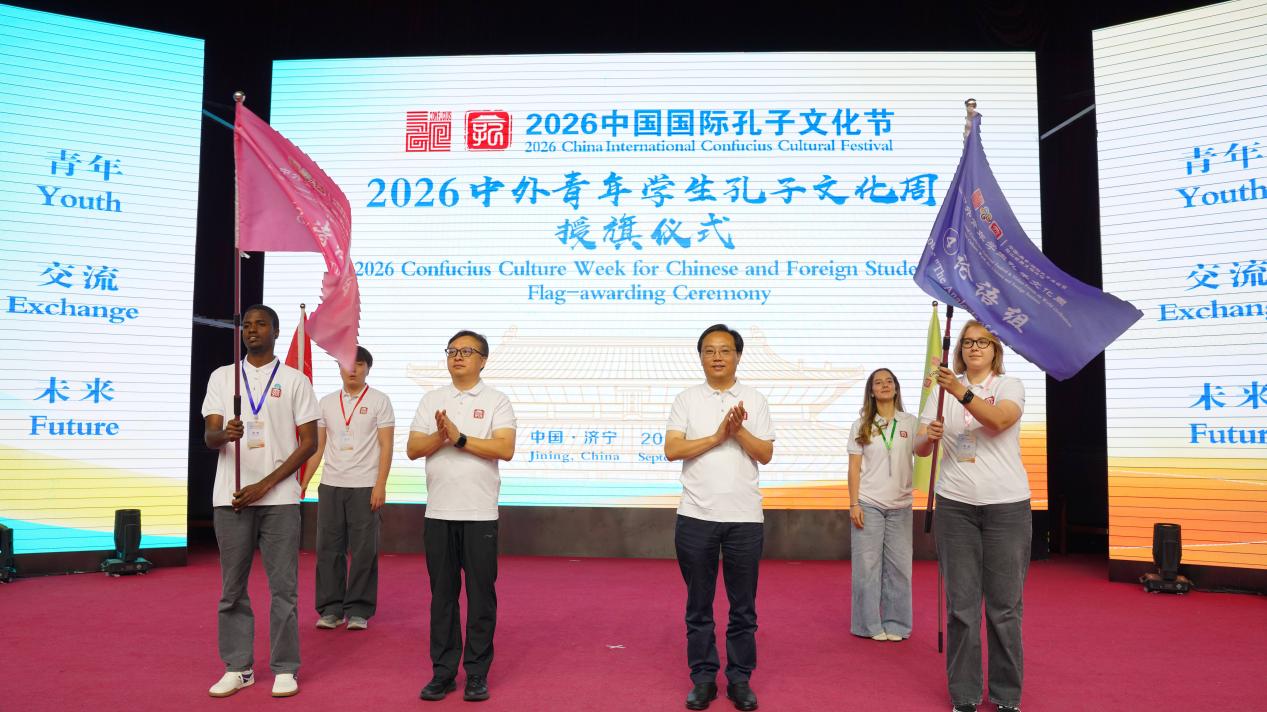
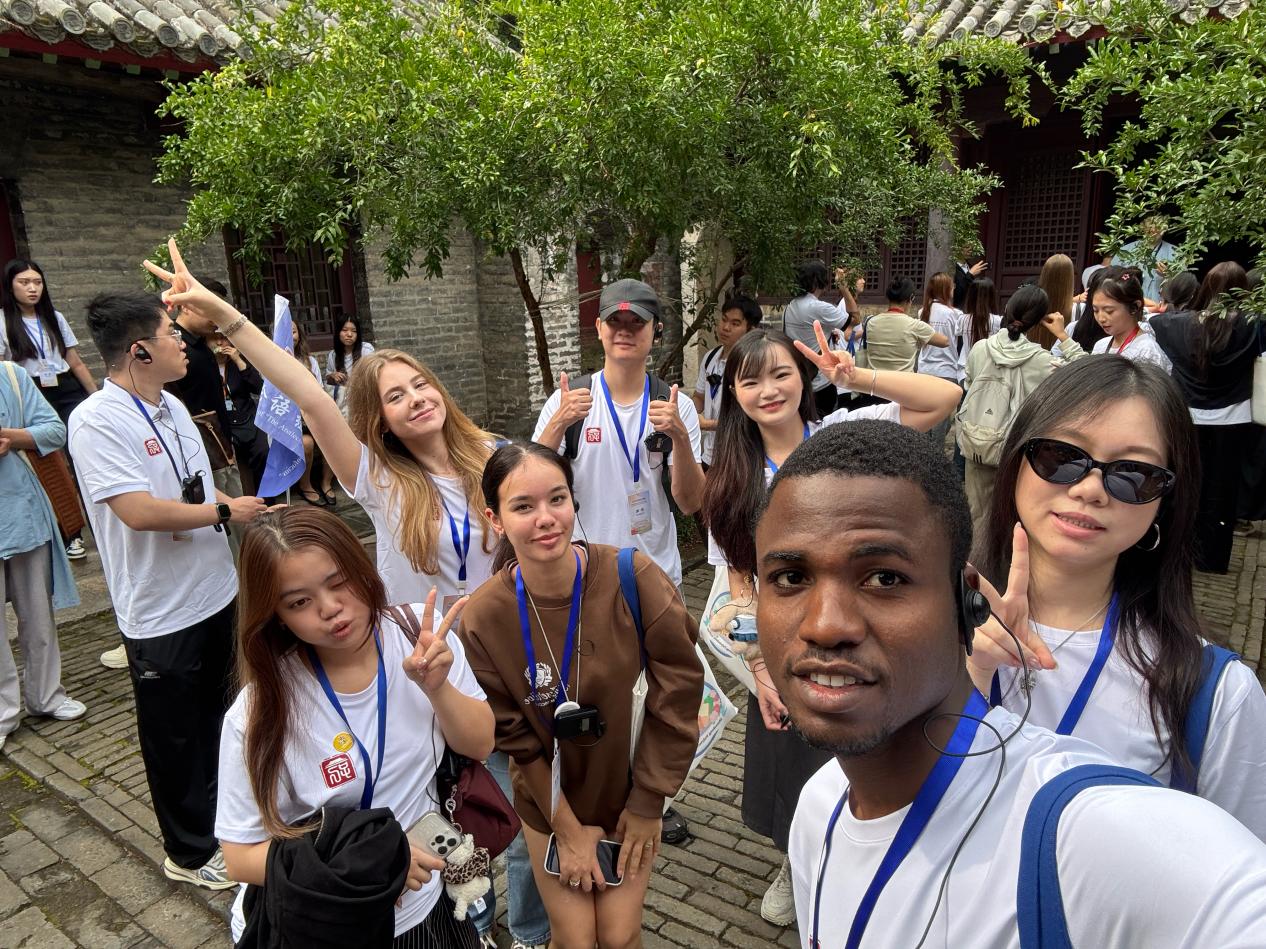
IBRAHIM MUNZALI KABARA, a student from Nigeria, was selected as the leader of the Analects group. He received the group flag from the conference staff, fully devoted himself to the activities, and accompanied his fellow participants in experiencing the enduring charm of the Analects of Confucius.
Following the opening ceremony, Shenzhen University students joined team-building activities, bonding over sports on the playground and pickleball courts and building friendships through friendly competition. Through activities such as learning traditional cuju, an ancient Chinese form of football, they got to know one another and connected with students from more than twenty universities.


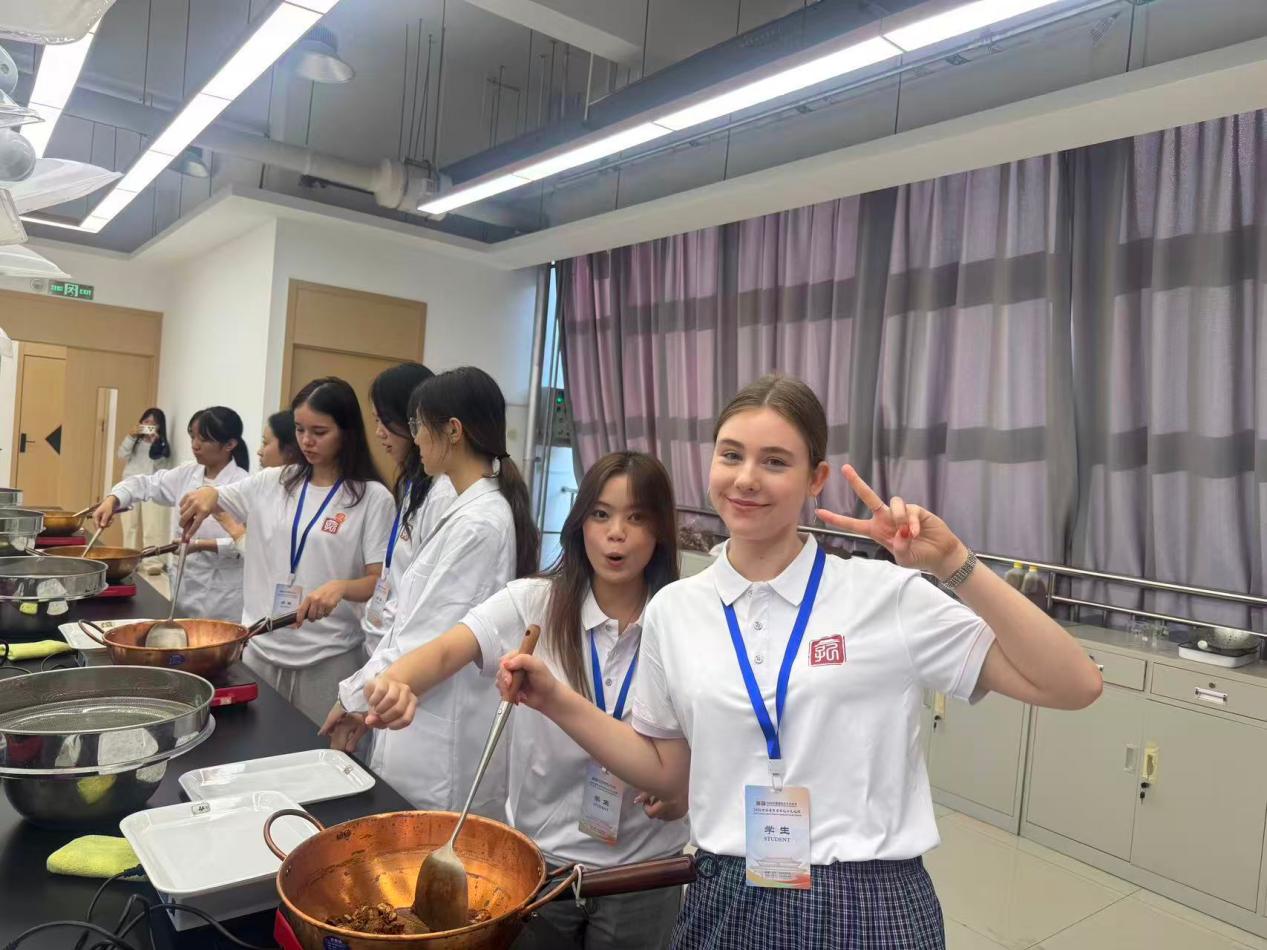
On the afternoon of September 26, the students attended a keynote report on exchanges and mutual learning among civilizations, broadening their international horizons through the exchange of ideas. They then visited the practical training center and the intangible cultural heritage experience and exchange base, where they participated in modern skills education and intangible cultural heritage activities, gaining a deeper appreciation of the profound heritage and unique charm of fine traditional Chinese culture through hands-on practice. That evening, a traditional Chinese culinary experience was held, allowing Shenzhen University students and young people from other countries to deepen mutual understanding and friendship while savoring local specialties.



Civilizations engage in dialogue because of their diversity, draw on each other's strengths through exchange, and advance through mutual learning. Through lectures and hands-on experiences, Shenzhen University students came to a more vivid understanding of the vision that "each civilization appreciates its own beauty, appreciates the beauty of others, shares beauty together, and thereby brings harmony to the world." This understanding was not a concept confined to textbooks, but something that gradually took root through handshakes, conversations, and new experiences.
On the morning of September 27, the students participated in a Confucian cultural study tour themed “Paying Homage to the Master.” Before the towering statue of Confucius and amid the elegant ancient architecture, they felt as if they had traveled back through a thousand years, engaging in a dialogue with the ancient sage and sensing the profound depth and gentle warmth of Confucian culture. Autumn sunlight bathed Nishan, and a breeze carried echoes from across the millennia. The students slowed their pace, quietly immersing themselves in the enduring richness and warmth of the Confucian tradition.


In the afternoon, the group visited the Jining Robotics Industrial Park as part of the “Smart Manufacturing Jining” enterprise tour. From millennia-old Confucian learning to modern technology, from the values of benevolence, righteousness, propriety, wisdom, and trustworthiness to intelligent manufacturing, the students saw that traditional culture is not a static legacy, but a living current that can mutually nourish and reinforce modern development. In the evening, the “World Youth Talk” was held, where young people from Shenzhen University and other countries spoke freely, using the voice of youth to respond to the questions of the times. Some came to understand China through exchange, while others came to understand the world through dialogue. Different languages and different backgrounds, yet under a shared theme, they listened to and understood one another. This is precisely what makes youth exchanges so compelling.

September 28 marked the anniversary of Confucius’ birth. On this day, students from Shenzhen University gathered with young people from other countries in Qufu to observe and study at the Confucius Mansion and Temple. In the morning light, the temple’s cypresses and pines stood lush and green, and its halls rose with quiet dignity. As ritual music began, the Confucius Memorial Ceremony gradually unfolded, and the sound of bells and chimes seemed to travel across more than two thousand years, bringing the ancient wisdom of benevolence, righteousness, propriety, wisdom, and trustworthiness back into the present.
For the Shenzhen University students, this was more than a ceremonial observation; it was a silent dialogue with the sages of the past. On the very land where Confucius once lived, taught, and reflected, they came to appreciate the inclusive spirit of “education for all without discrimination,” the wisdom of “seeking harmony without uniformity,” and the guiding principle of “do not do to others what you do not want done to yourself.” Young people from different countries stood in shared reverence and resonated with a common aspiration. Here, civilization was no longer an abstract concept, but something tangible and warm, felt in the heart.
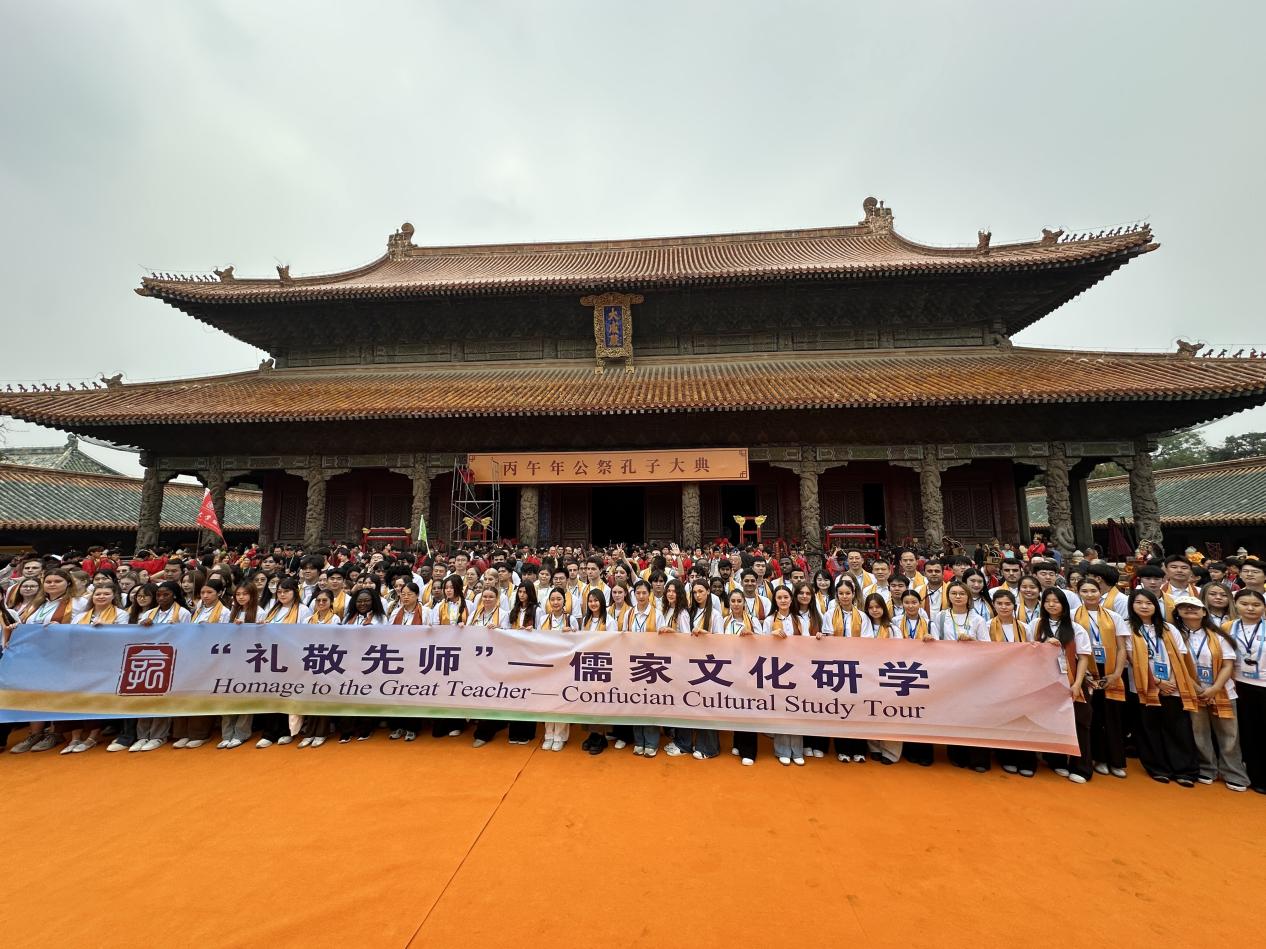

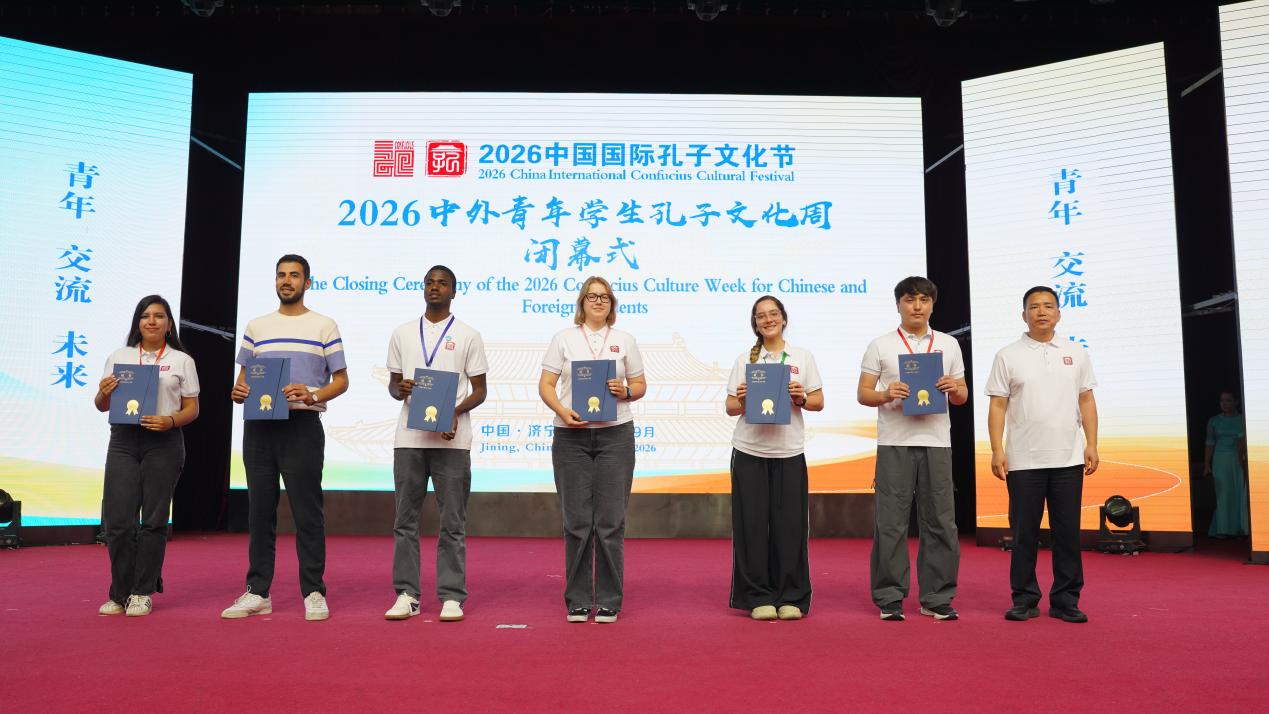
That afternoon, the closing ceremony of the 2026 Confucius Culture Week for Chinese and Foreign Students was held. The organizers summarized the achievements of the event and expressed gratitude to all participants. For Shenzhen University, the four-day journey enabled students to connect what they had learned in the classroom with the real China, to link their professional training with exchanges among civilizations, and to align their personal growth with the mission of the times. As they prepared to return home, they carried with them not only memories of Jining, but also a renewed sense of responsibility to continue telling China’s stories well and promoting mutual learning among civilizations. On September 29, the Shenzhen University faculty and students returned home with the delegation, bringing the Culture Week to a successful conclusion.

Four days were short—too brief to explore every cultural landmark of Jining. Yet they were also long enough to plant the seeds of mutual learning among civilizations in the hearts of young people. Located at the forefront of China’s reform and opening-up, Shenzhen University has always encouraged its students to use language as a vessel and culture as a bridge, so that they may experience, understand, and share the story of China on the very land of this vast country. In the years ahead, young people from Shenzhen University will continue to serve as inheritors of fine traditional Chinese culture and promoters of exchanges and mutual learning among civilizations, letting their youth shine through civilizational dialogue and helping the world grow closer through shared appreciation of its diverse beauty.





 Home



